Was SEOmoz affected by Google’s Panda Updates? It depends how you look at it.
Since the first update hit in February of 2011, organic search traffic to SEOmoz has increased by 49%.
To be fair, the dates that Panda hit don’t match up
to periods when we saw traffic gains.
In this time period we’ve rolled out original content, popular blog posts, introduced new tools and made several SEO improvements. In a way, you could say we’re good at not getting penalized by Panda.
To maintain dominance in the search engine optimization market, Google constantly researches and adjusts its algorithm to provide the best search results for users.
Google makes small updates all the time and these updates have become known as the Google Dance.
Major algorithm updates, which have a big impact on search results, happen far less frequently. These updates are usually targeted at a specific problem, usually an area that is allowing spam to rank well in the search results.
Google has just announced that their “Panda” rankings changes, first launched in the United States in late February and rolled out to English language indices internationally in April, have now launched internationally in all languages other than Chinese, Japanese, and Korean.
Their post notes that for non-English indices, this change impacts 6-9% of queries (vs. the 12% the original US English launch). This launch also includes a few minor changes to the English version of Panda, but shouldn’t have a substantial impact.
As a one-time editor the Panda update was a bit of a 'Hallelujah' moment. It was the point in time when past boardroom 'rants' actually came to fruition – that content is the ONLY thing of true value to an audience and that its time would come around again.
Those 'half full' writers, fed up with watching helplessly as 'their' audiences migrated online but were too afraid to go out there and learn about it just saw it as a 'rah-rah' speech that was designed to adopt the online universe.
The reality was that I just never lost sight of the fact that the content is king cliché actually has more than a little truth to it.
It's been the foundation for our agency and today I wanted to share with you a little bit of insight into how we have transitioned the type of content planning that we have taken from the world of consumer specialist market magazines into the online space.
Yesterday, there were early rumors floating around at WebmasterWorld that there was yet another Panda updating taking place, possibly Panda 2.4. I covered it at the Search Engine Roundtable and asked Google for confirmation.
Google informed me that there is no Panda update taking place currently. Google told us, “no Panda update is currently occurring.”
So why are people noticing Panda-like changes? Google told us that maybe “those other sites may just be now seeing changes from the previous Panda update a couple weeks ago, but other than that, there’s no update or anything out of the ordinary happening here.”
When there is a new Panda update, we hope to be the first to let you know.
It’s been about six months since Google rolled out the first Panda (then called Farmer) update to its ranking algorithm — and Panda has since gone through at least three updates that we know of.
Have we learned anything in that six month period? That was the topic of our “Discussion of the Week,” which asked What Have We Learned From Google’s Panda Algorithm?
And that topic got surprisingly few replies, perhaps due to vacations/summer, or perhaps — as I suggested in a comment that I posted — because we collectively haven’t learned much yet from Panda.
There’ve been exceptionally few stories of sites that were hurt by Panda and have come around to recover.
Adult website owners that were quick to blame Google’s “Panda” update for a substantial decline in organic search traffic may have another culprit to cite.
The Electronic Frontier Foundation (EFF) has issued a technical analysis of recent reports that U.S. search traffic is being surreptitiously redirected in an effort to monetize users’ searches.
“Earlier this year, two research papers reported the observation of strange phenomena in the Domain Name System (DNS) at several U.S. ISPs,” states the EFF analysis. “On these ISPs’ networks, some or all traffic to major search engines, including Bing, Yahoo! and (sometimes) Google, is being directed to mysterious third party proxies.”
This knowledge base was expanded by yesterday’s report in New Scientist, which illustrates how website traffic is being clandestinely rerouted by a company called Paxfire — a phenomenon which the EFF post explains in greater detail.
Since the Google Panda Update first launched back in February (and really for some time before that), there has been a lot of discussion about search quality throughout the industry – the quality of the content that search engines are returning in their results.
This is the whole reason the Panda update exists. It’s all about improving the quality of results. Some will dispute the success of that, but it is the reason for better or for worse.
But what about Bing? It doesn’t command nearly the search market share that Google does, but as it powers Yahoo search, it’s really the only major competitor in town.
Bing talked a bit about its own views on content quality this week, and content producers might do well to check take notice of that as well – especially those who may have been hit by the Panda update, but are still doing ok in Bing.
Whereas Google had a list of questions one could ask themselves to asses the quality of their site, Bing has published a list of things to avoid, which reads as follows:
Google has been making significant updates lately. Google Panda 2.3 Update is now live as part of a commitment to “return high-quality sites to Google users”. Judging by comments on forums such as Webmasterworld, keeping tabs on this is very tricky business.
The initial premise was to weed out so-called “content farms” and other low quality sites from the SERPs. Along with some high profile casualties, a significant number of sites have been experiencing a massive drop in their rankings and consequently traffic.
A couple of months ago Google stated that 12 percent of search results were to be affected in the US but Panda has now gone global and the effect may be greater than initially stated.
Panda 2.3 was rolled out on July 22nd and since then I have been hearing a nice number of reports from webmasters that they have recovered.
Of course, we are still getting reports that sites are still not doing better and then new reports of sites that just hit by this update.
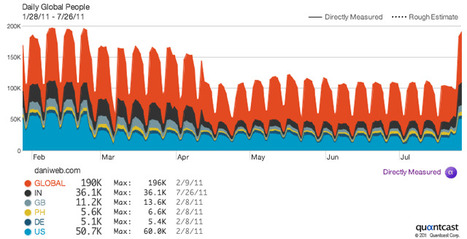
But for the first time, I am seeing a significant number of reports from people saying they recovered. WebProNews has an article with DaniWeb about her full recovery. She shared Google Analytics data that can be confirmed with Quantcast data.
This week, it was confirmed that Google had made a minor adjustment to its Panda algorithm update, which has drastically altered the search engine’s results several times since its first iteration in February.
As Google makes hundreds of algorithmic changes each year, Google downplayed this as any major shift. The official statement, as obtained by Barry Schwartz, was:
“We’re continuing to iterate on our Panda algorithm as part of our commitment to returning high-quality sites to Google users. This most recent update is one of the roughly 500 changes we make to our ranking algorithms each year.”
“What did Google do?” This has been the cry of web publishers since Google’s ‘Panda’ algorithm change in April, although when they say it, there’s usually more cursing.
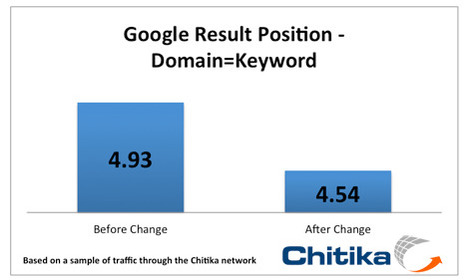
Google is notoriously tight-lipped with the specifics of their algorithms, but we’ve crunched some data and come to a theory: detailed domains or subdomains are much more important than they once were.
A completely hypothetical example is this: before the change, Google would see www.example.com/make-awesome-pizza and tie it strongly to a search term like “How do I make awesome pizza?”
Now, the same keyword would be more likely to get make-awesome-pizza.example.com or www.make-awesome-pizza.com as a higher result.
Google finally updated the German index yesterday. They communicated in their German and English Google-Webmaster-Central Blog that the changes are now in place for every language except Japanese, Chinese and Korean.
As expected, the algorithm change was aimed mainly to article directories, content aggregators and people search engines. But the panda is still up to its reputation to provide surprises.
What made it challenging for us is the fact that they issued the update on the day that my company moved into a new office in Berlin and I happened to be away on vacation in the USA.
But anyway, I took a break in the middle of the desert in Arizona to check the figures, winners and losers.
Google announced early this morning that it is rolling out out the Panda update in different languages around the world.
“Our scientific evaluation data show that this change improves our search quality across the board and the response to Panda from users has been very positive,” Google Fellow Amit Singhal said on the Google Webmaster Central Blog.
For many months, we’ve been focused on trying to return high-quality sites to users. Earlier this year, we rolled out our “Panda” change for searches in English around the world.
Today we’re continuing that effort by rolling out our algorithmic search improvements in different languages. Our scientific evaluation data show that this change improves our search quality across the board and the response to Panda from users has been very positive.
For most languages, this change impacts typically 6-9% of queries to a degree that a user might notice. This is distinctly lower than the initial launch of Panda, which affected almost 12% of English queries to a noticeable amount.
We are launching this change for all languages except Chinese, Japanese, and Korean, where we continue to test improvements.
If you're unfamiliar with Google's Panda Update, it is essentially one of Google's search engine algorithm updates that targets and pushes down the rankings of content farms and duplicate content on the web.
Ultimately, it enables authentic and unique content to rank higher in Google search results.
If Panda taught us anything, it's that content is king today even more than it was 5 years ago. At the end of 2010, there were 255 million websites online, which made for quite a bit of content!
After Panda, 11% of those websites took a pretty big hit to their organic traffic because their content was low in quality. As Google continues to iterate on its Panda algorithm, more and more sites are feeling the sting, but there are still millions (if not billions) of web pages going strong.
So, in a world with so much information out there, how is your content going to stand out from the crowd and, importantly, how will you protect it from a hungry Panda?
During the panel discussion at the Churchill Club Danny Sullivan asked Matt Cutts, Ben Gomes, and Amit Singhal about the recent algorithm changes including the famous Panda.
Although the answers were not particularly informative they did give insight into Google’s quality algorithm release process.
According to Amit Singhal, once identified the problem is solved strictly by algorithm (Google still claims they do not use manual human intervention for much more than testing the quality of results and manual penalties in very few instances).
Candidate algorithms are then implemented in code and tested using old query logs. There results are then analysed for quality.
Google has completely redone the spam report form inside of Google Webmaster Tools, and in announcing it on Twitter tonight, Matt Cutts called it “the biggest refresh of our spam report form in, oh, say 10 years.”
And calling it a “page” is something of a misnomer because Google has turned what used to be one simple form into a mini-site with eight links for more information about various types of problems.
Can you please explain what this is and how it effects my site?. www.eversparkinteractive.com A Question and answer session about all things SEO.
This clip answers the question what is the big panda and how does it affect one’s sites. An in depth look at the changes to the Google Algorithm brought to you by the experts at Everspark Interactive.
If the challenge of working with Google’s Panda update is weighing heavily on your SEO copywriting mind, you’re not alone. Today’s video post addresses the ever more frequent reader question: “How do I write online copy for Google’s Panda update?
We have been reporting discussions around a possible rolling update for Panda. Last night I received confirmation from Google at Search Engine Land that Google indeed update the Panda filter...
To get content containing either thought or leadership enter:
To get content containing both thought and leadership enter:
To get content containing the expression thought leadership enter:
You can enter several keywords and you can refine them whenever you want. Our suggestion engine uses more signals but entering a few keywords here will rapidly give you great content to curate.


 Your new post is loading...