On Friday, Google posted an update on its Webmaster Central blog entitled "Providing More Guidance on Building High-Quality Sites". The piece expands on much of what Google has said about the Panda update since its original release on February 24th.
In public statements about the Panda update, Google has referenced a number of questions that they're attempting to answer algorithmically. "Would you feel comfortable giving your credit card information to this site?" and "Would you accept medical advice from this site?" are two that have been around since the beginning. Friday's Webmaster Central post offered up a more substantial list with some of the highlights below:
Google lost case will have serious consequences to the way information is searched and managed on the Internet. Such ruling “would put at risk all referencing services, or even cause them to disappear.”
Content farms scored a win in the battle against Google's anti-spam search algorithms today as Demand Media, the company behind eHow, Cracked, and Livestrong, announced a quarterly revenue of $79.5 million--up 48% from the same quarter last year. Demand also reported a 32% increase in page views on owned and operated websites, but this doesn't mean that the company can rest easy quite yet.
After Google made its first anti-spam search algorithm change in February, eHow (Demand's biggest site) actually saw a jump in page views. But Google wasn't done weeding out the content farms; in April, the search engine tweaked its algorithm again, and eHow suffered.
In recent months we’ve been especially focused on helping people find high-quality sites in Google’s search results. The “Panda” algorithm change has improved rankings for a large number of high-quality websites, so most of you reading have nothing to be concerned about. However, for the sites that may have been affected by Panda we wanted to provide additional guidance on how Google searches for high-quality sites.
Forget for a moment everything you think you know about Google and how they rank content. Put yourself in the role of a person who is tasked with ranking results. One result gets clicked often, but most of the time the user only stays on the page for a few seconds (if that), returns to the results page, and clicks on another result.
Meanwhile, another result on the same page gets clicked on a lot too, but when users click on that one, they stay on the page longer, and don’t even return to the results page to find another result to click on. Nor do they refine their query. Which page is most likely the one that has the better content for that particular search?
If you’ve been hit by the Panda update or are just worried about its implications, you’ve probably read a lot about “thin” content. We spend our whole lives trying to get thin, and now Google suddenly hates us for it. Is the Panda update an attempt to make us all look like Pandas? Does Google like a little junk in the trunk?
It’s confusing and it's frustrating, especially if you have real money on the line. It doesn’t help that “thin” content has come to mean a lot of things, and not every definition has the same solution. To try to unravel this mess, I'm going to present 7 specific definitions of “thin” content and what you can do to fatten them up.
Think you're affected by the recent algorithm change?
Here's one rightfully angry web publisher: "There are SEO's and scum bag content thieves that have been gaming search for eons.
This algorithm seems to have exposed more of them.
I find regular examples of shady content appearing at the top of search queries in Google on a daily basis now.
This algorithm didn't solve the shady problems and has done massive damage to many legitimate businesses.
Suddenly, I have to be tasked with chasing down content thieves, researching them, sending out DMCA takedowns, following up on that, long term tracking such sites so it doesn't reappear, etc.
That's unacceptable from my perspective. I am doing free labor for Google because they can't rank content very well suddenly."
I've been following the Google Panda update since late January, when the official Google blog mentioned upcoming algorithm tweaks which the blogosphere dubbed a "war on content farms."
On Squidoo, most members were unaware of the pre-Panda buzz, and even those following the news may not have noticed the troubling fact that some commenters were lumping Squidoo in with "content farms". I was pooh-poohed in SquidU's forums for sounding the alarm.
Perhaps I was too Chicken Little: we haven't been hit too badly. But why?
I am continually surprised at some in the community that point to a couple of individual metrics as 'the ones' that caused xyz to happen in the most recent update. I think it is time to look at the greater picture of data that Google has available.
Eric Enge had a presentation at PubCon Austin that he felt Panda pumped up 20% user engagment metrics into the algo. It really got me thinking about this aspect indepth. I started to put together a list of possible data sources google could use as metrics (signals), and I was pretty surprised at how large a list it became with very little effort.
There is a whole host of data Google can use to determine a "quality site". Most of those metrics will fall into the realm of user engagement. Those metrics combined with a successful search result in a metric for your website. I believe that metric is now replacing Page Rank as the number one Google metric. I have been calling this mythical metric, the User Search Success Rate (USSR) or the Panda Metric (PM). This is the rate at which any search results in a happy Googler.
The metric starts before the user ever types in a query at Google:
I’m sure many of you by now have seen the short conversation between Matt Cutts and Tom Critchlow regarding the length of time it takes to recover from a Google Panda Penalty.
I’m going to offer my comment on this exchange and why I think it’s important. I’ll try to not guess or read into things that may or may not exist. I’ll also attempt to keep to the facts and what I know about Search Engines and how they work, particularly Google.
Here is the conversation between the two of them in-case you missed it:
In the Manufacturing Consent DVD a newspaper executive highlighted that they liked to have a 60/40 ratio between ads and content. Google says that if over half your page's content is ads then your pages are of insufficient value.
What Google engineers miss when delivering sermons to webmasters is that Google is fine with disappearing their organic search results for self promotion & even advertises that consumers can't tell the difference between their search ads and the organic results.
You see, tricking people is bad. Unless you are Google. In which case you have to hit the quarterly numbers.
Google has had very little to say to hurting webmasters who saw their rankings tank overnight due to Google's rollout of the Panda Update. Many of these webmasters have depended on traffic from Google to pay mortgages and feed their families -- and many sites were forced to lay off staff and no doubt others have just shut down.
When Google introduced its new algorithm earlier this year aimed at elevating the quality of its search results, some of the hardest-hit sites were content farms like eHow, run by Demand Media.
An NPR story Tuesday shows that the Panda Update is driving down the search rankings of retailers, too, especially those with dozens of links to product descriptions that are generic and common to multiple sites.
The idea of Panda, after all, is to help users find content with some distinctiveness and usefulness. But what NPR discovered in profiling a big furniture broker Tuesday are the seeds for a whole new category of content farms: fast and cheap content dashed off for the sole purpose of restoring the search rankings of retail sites.
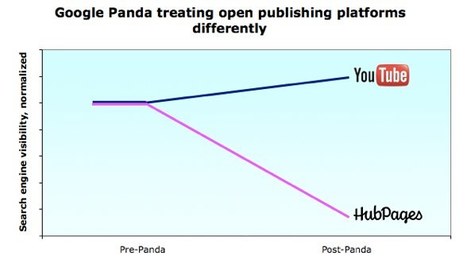
Search engines are a critical part of the democratization of the Web and none is more important than Google. They provide the critical gateway to information in a meritocratic way that has traditionally rewarded usefulness and quality over name recognition of the content creator, valuing the utility to the searcher over all else.
In parallel, open publishing platforms have provided free tools for creating and sharing information with topical expertise and a voice to anyone on the Web. These platforms feed the search engines and, in return, the search engines have delivered steady audiences. This ecosystem has been lucrative for the search engines, an essential outlet for the information sharers, and a great way for the world to have access to a broad swathe of information, from the full range of political opinions to thousands of ways to barbecue a chicken.
The Panda update has produced some good, some bad, and some downright ugly – this is a story of ugly, in the form of 1990′s era style content scraping/remashing, and old-school poor-man’s cloaking, which together have produced Google SERPs that look like they’re from a ’99 Altavista query.
Let us start by saying we do not condone this activity. We discovered this when one of our clients, freshtrends.com was the victim of a ruthless attack by an Affiliate and we have taken action to report all of the infringing websites to Google.
The reason we are writing this is to inform webmasters to be wary; Google has not yet been able to eradicate duplicate content issues (essentially Googlewashing) and server side or Javascript cloaking is seemingly back on the rise.
The Google Panda Update – sounds harmless, but it’s not. It has recently slapped a lot of huge sites and even the trusted/reputable ones (globally) off the Google’s search result pages. The major factors and basis of this update mostly targeted sites that contained poor quality of content and pages that have external duplicates.
I have been receiving a lot of inquiries from big websites about this specific fixes recently through my link marketing services page, which made me decide to create this post. The strategies listed below are mostly based on my own research through various web sources, actual analysis/auditing of prospected clients’ sites and personal observations.
Google recently launched a new algorithm for generating search results — one meant to keep low-quality sites out of top hits. For Mitch Lieberman's online furniture business, the change has led to a mass drop in rankings and profits.
Jack: Did you hear about the new Google ranking change? It’s caused more problems than the Stock Market crashing!
Joe: Its totally insane how much power one small group of people have over the livelihood of so many people. I am so depressed! I thought my 10 thousand auto blogs were going to pay off.
To get content containing either thought or leadership enter:
To get content containing both thought and leadership enter:
To get content containing the expression thought leadership enter:
You can enter several keywords and you can refine them whenever you want. Our suggestion engine uses more signals but entering a few keywords here will rapidly give you great content to curate.


 Your new post is loading...