

After three months no site is yet out of Panda. Google doesn't look like knowing what it is doing.

 Your new post is loading...
 Scoop.it!
After three months no site is yet out of Panda. Google doesn't look like knowing what it is doing.

No comment yet.
Sign up to comment
Scoop.it!

Kenneth C. Wisnefski, founder and CEO of WebiMax, the #1 rated SEO firm in the United States and Australia, has been astounded by the impact of the Google Panda update, stating "our phones have literally been ringing off the hook with businesses seeking assistance with the effects of this algorithm change".
Scoop.it!

Will Google use quality scores for Adsense publishers' pages to determine how much compensation those publishers received for displaying Google advertisements on their pages?
Scoop.it!
What do you need to do to recover from the Google Panda penalization? Is there something specific you need to look at? How long it will take to recover? The answer to all of these three questions is: nobody knows (yet) for sure.
Scoop.it!

If you have been hit heavily by the Google Panda penalization, like MasterNewMedia has, one of the hardest thing to do is to understand what is the appropriate frame of mind to get into before starting to fix, modify or correct possible...

's comment May 31, 2011 3:05 AM
The media Internet buzz has been about Demand Media and how Google's newest algorithm change - designed to devalue "content farms" - would hurt traffic to the giant online publishing effort.
car dvr gps http://www.espow.com/wholesale-car-electronics-car-dvr.html
Scoop.it!
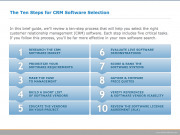
on't yawn. Copyright protection has big implications for your organization. Bloggers, website owners, and any organization that publishes content online should heed this advice: copyright your content!
With Google's recent Panda update, scraper sites are now frequently outranking the original author of great content. That is, websites that steal and illegally publish content from other websites are now ranking higher in Google than the site from which they stole the content. Content creators need to track down scrapers and force them to remove copyrighted content. However, an unregistered copyright claim is a "timid, toothless tiger," as our attorney explained. Any counsel worth their weight knows this. You can cry and stamp your feet all you want, but you really have little leverage against scrapers if you haven't registered your copyrighted content. Adding copyright language to your website footer is not enough.
Scoop.it!

Among SEO practitioners, duplicate content has been a major topic that keeps returning. And advice has typically centered on the need to develop unique c...
Scoop.it!

I was having a conversation on WMW recently about social signals and Panda when someone asked what “proof” I had that Panda was based on “social” or “user feedback” signals. I respect anyone in the SEO industry who doesn’t just automatically believe everything they read on forums from people who provide no proof. It is a rare and undervalued trait.
So about fifteen minutes later I had a nice long reply. Then, just before hitting the “submit” button, I thought to myself: “Why am I writing all of this free content for a site that charges me for access?” So, wrong or right, here are my opinions and they’re going on my own site, not Brett Tabke’s.
Scoop.it!

A new niche blog focusing on the new Google Algo.
Scoop.it!

Google’s Matt Cutts confirmed this morning that Google has lifted J.C. Penney’s SEO penalty, that the Panda update will continue to rollout internationally and offered numerous SEO- and search-related tips in a live webchat on the Google Webmaster Central YouTube Channel.
More than a thousand viewers tuned in but, for those who weren’t able to stay for the full 90 minutes, or who missed it entirely, here’s a recap of some of the more important topics..
Scoop.it!

I know this poll does not apply to all our readers but I know that 40% were impacted by Panda - so the 40% of you who read this site, please take my poll below.
The question is simple, did you recover at all from the Google Panda update if your site was hit?
Scoop.it!
This is great: watch this video. Google's recent Farmer update slammed down content farms like e-how, Demand Media, and eZine Articles. Of these many farmer boys, one goes to Google to meet ...
Scoop.it!

Rand Fishkin is the CEO & Co-Founder of the web's most popular SEO Software provider; SEOmoz. Together with Eric Enge, he co-authored the Art of SEO from O'Reilly Media and was named on the 40 Under 40 List and 30 Best Young Tech Entrepreneurs Under 30.
Rand has been written about in The Seattle Times, Newsweek and PC World among others and keynoted conferences on search around the world. He's particularly passionate about the SEOmoz blog, read by tens of thousands of search professionals each day. In his miniscule spare time, Rand enjoys the company of his amazing wife, whose serendipitous travel blog chronicles their journeys.
|
Scoop.it!
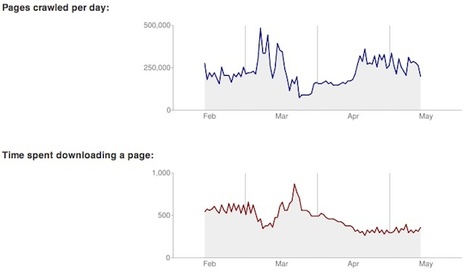
If you feel your site was wrongfully hit by Google’s Panda update, there might be hope for you yet.
Scoop.it!

In April, Google unveiled the ‘Panda’ update, the latest algorithmic change designed to penalise “sites which are low-value-add for users, copy content from other websites, or sites that are just not very useful”.
The premise of the changes was broadly outlined at the time, but Google’s webmaster team has recently gone further by cryptically listing the key questions that should now be addressed when creating content – consequently demystifying the areas that the algorithm is probing more diligently. Information that comes directly from Google is always worth listening to and acting on.
Scoop.it!

In the battle to maintain the quality of its SERPs, Google is increasingly tweaking its algorithm. Since there are only so many on-page ranking factors for Google to consider, it's logical to expect that off-page ranking factors will only become more numerous and important over time.
At least one website operator believes these off-page factors may now include email reputation. Jake Ludington, who runs JakeLudington.com, noticed a drop in his traffic in April, and after looking at his website, came to the conclusion that his email newsletter must have caused the drop. He explains: When my traffic at JakeLudington.com suddenly dropped in early April, I thought I’d made some kind of change that was resulting in a technology failure. I was wrong. Everything appeared to load as it should. So why the sudden drop? I called around to a handful of friends and discovered I was not alone. Early April was the second round of Panda algorithm changes. With some additional digging, I got a tip from someone at Google who indicated Google was penalizing JakeLudington.com with some new measurements that penalize email behaviors for domains. In talking with a number of other online publishers who were also hit with a stiff penalty, including LockerGnome, it appears that one common theme is that we all have email newsletters.
Scoop.it!

The Google Panda Update was the first set of major changes to Google’s algorithms earlier this year. More changes are coming and I want to share some tips to help you prepare.
I’ve spent the last four months researching and testing for our clients at nd5media as well as my own projects.
Scoop.it!
After some dispute, Matt Cutts and other Google spokespeople have stated that the search giant is still willing to take manual action against sites that publish spam. Content marketers, take note.
Scoop.it!

WebProNews posted a video interview named DaniWeb Speaks out on Recovering from Google Panda.
Truth is, her website, daniweb.com did not recover from the Google Panda update. She did discuss the changes she made, which she said stopped the decline in her traffic drop and maybe had a slight increase in Google traffic, but she is far from a recovery case on Panda.
Scoop.it!

From the first announcement of Google’s algorithm update this year, we knew that it was expected to eliminate low-quality content and, particularly, content farms.
However, many of the sites that were lumped into this low-quality category did not agree with the classification, including popular IT discussion site DaniWeb.
Scoop.it!

The media Internet buzz has been about Demand Media and how Google's newest algorithm change - designed to devalue "content farms" - would hurt traffic to the giant online publishing effort.
The fact is, Google's changes didn't really negatively impact Demand Media, and what many miss is that "content farms" in their purest form are not really the target of Google (regardless of what they say), but scraper sites, not websites with a lot of content written by people you never heard of, are. Scraper sites actually steal text word for word and must be attacked. But that anti-little-blogger bias has blinded many from seeing the truth: Google has it's own content farm, and it's called Blogger.
Scoop.it!
Matt Cutts shares some new valuable information about Google Panda and its future.
Scoop.it!

Google has stopped punishing JC Penney for manipulating search results, engineer Matt Cutts has confirmed. In February, Google manually demoted Penney in search results because it discovered the company had been using...
Scoop.it!

I stumbled across the above video today, uploaded by a HubPages author. HubPages, as you may know, was one of the sites hit hard by Google’s Panda update, and its CEO Paul Edmondson has been rather vocal about the update since it hit. Recently, he wrote a piece about it, bringing Google’s competitive practices into the conversation.
He has also compared HubPages content strategy to that of Google’s own YouTube, questioning why they were treated so differently. Interestingly enough, between the initial U.S. launch of the Panda update and the global launch, a Googler wrote a guest post on the HubPages blog talking about how to write quality content for AdSense.
Scoop.it!

Google recently changed the rules of high rankings by introducing a new update that targets ‘low quality’ websites. And its time for you to change your SEO and marketing strategy accordingly.
Millions of webmasters and SEO geeks are loosing traffic (and sleep) due to what Google calls ‘PANDA’ or ‘Farmer’ update which targets ‘content farms’ and de-ranks them. ‘Captain Google Panda’ is sailing against the Pirates of Content and punishing those who have been creating huge waves of content in their ‘content mills’ or writing only to capture a sea of keywords on Search Engines. Impacting more than 11.8% search results worldwide, too much of noise, speculation, opinion and coverage over this update has ultimately caused too much of confusion in SEO community. Here is a complete guide on what you are up against, how to shape your high ranking strategy for future and a detailed survival guide against the wrath of Google Panda update.
|