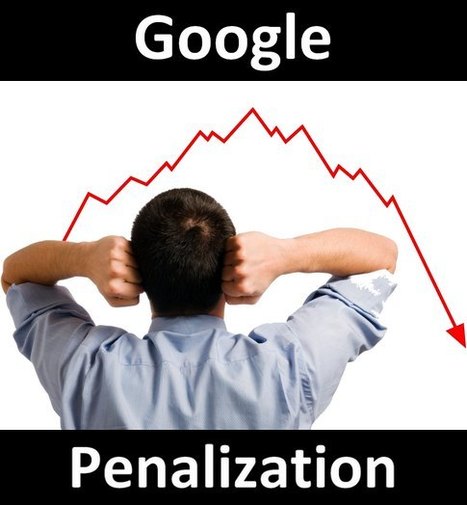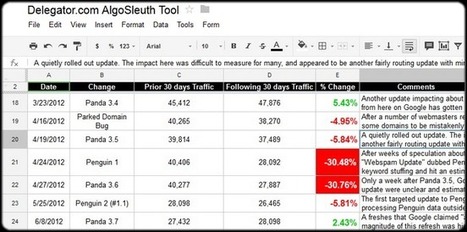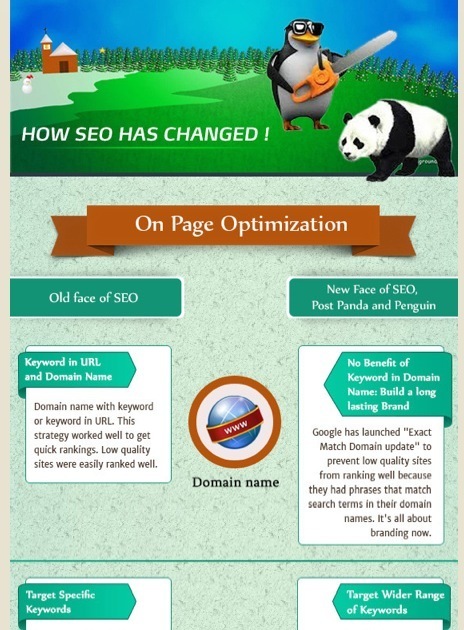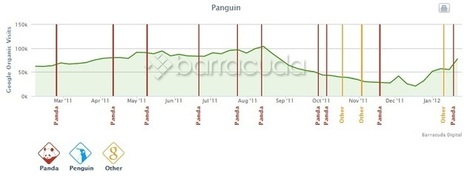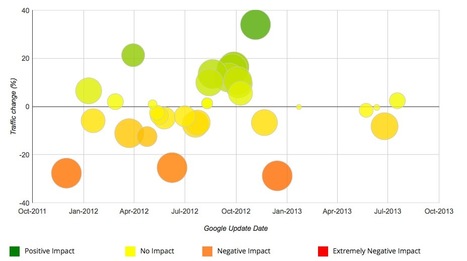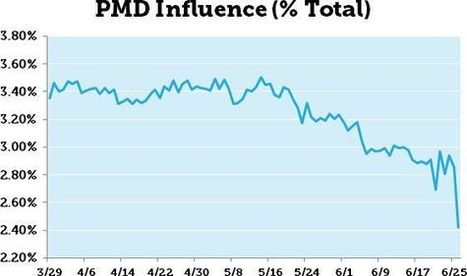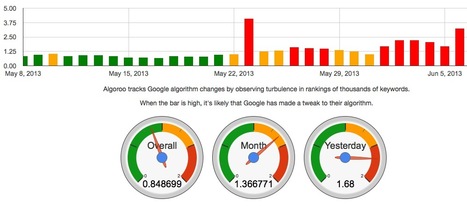

It has been a little over two weeks since “hell broke loose” with Google’s Farmer/Panda algorithm update. Some sites that had been relying heavily on organic traffic saw that traffic plummet, while others gained.
The changes impacted roughly 12 percent of US search results according to Google.
The Online Publishers Association estimated that the changes would impact approximately $1 billion in revenue.
There’s been considerable discussion, debate and suggestions for what to do since Panda appeared (see related entries below). The purpose of Panda (Google’s internal name) was to attack two categories of sites that Google saw polluting search results with spam or “low quality” content.
Immediately before Panda was unleashed, Google explained its objective in a January 21 blog post:
We’re evaluating multiple changes that should help drive spam levels even lower, including one change that primarily affects sites that copy others’ content and sites with low levels of original content. We’ll continue to explore ways to reduce spam, including new ways for users to give more explicit feedback about spammy and low-quality sites.
As “pure webspam” has decreased over time, attention has shifted instead to “content farms,” which are sites with shallow or low-quality content.
The changes impacted roughly 12 percent of US search results according to Google.
The Online Publishers Association estimated that the changes would impact approximately $1 billion in revenue.
There’s been considerable discussion, debate and suggestions for what to do since Panda appeared (see related entries below). The purpose of Panda (Google’s internal name) was to attack two categories of sites that Google saw polluting search results with spam or “low quality” content.
Immediately before Panda was unleashed, Google explained its objective in a January 21 blog post:
We’re evaluating multiple changes that should help drive spam levels even lower, including one change that primarily affects sites that copy others’ content and sites with low levels of original content. We’ll continue to explore ways to reduce spam, including new ways for users to give more explicit feedback about spammy and low-quality sites.
As “pure webspam” has decreased over time, attention has shifted instead to “content farms,” which are sites with shallow or low-quality content.


 Your new post is loading...